Information Links
Related Conferences
Current Issue Volume 11, Issue 2 - 2026
Psychobiological perspective from Neurosciences on Gender Dysphoria and Transsexualism
Garcia-Falgueras, Alicia1,2,*
1Psychobiology Department, Spanish University, Madrid, 28019, Spain
2Psychobiology Department, Netherlands Institute for Neuroscience, Meibergdreef 47, 1105 BA Amsterdam, The Netherlands
*Corresponding author: Alicia Garcia-Falgueras, Psychobiology Department, Spanish University, Madrid-28019, Spain & Psychobiology Department, Netherlands Institute for Neuroscience, Meibergdreef 47, 1105 BA Amsterdam, The Netherlands, Tel: +34 91 398 62 88 & +31 20 566 5500; Email: [email protected]
Received Date: April 30, 2026
Published Date: May 25, 2026
Citation: Garcia-Falgueras, Alicia. (2026). Psychobiological perspective from Neurosciences on Gender Dysphoria and Transsexualism. Mathews J Psychiatry Ment Health. 11(2):63.
Copyrights: Garcia-Falgueras, Alicia. (2026).
ABSTRACT
The relationship between gender identity and brain structure is the subject of ongoing and widespread debate in scientific publications from numerous countries around the world interested in this topic. It seems undeniable that an intrinsic relationship exists between gender identity and brain structures, as gender identity is established prenatally, influenced by genetic and hormonal factors. Transsexualism, a severe form of gender dysphoria, manifests as an insistence lasting at least 6 months on belonging to the counterpart gender to that assigned at birth, often entailing painful surgeries and costly, lifelong treatments to reach the suitable likeness. While progress is being made in understanding and addressing this clinical condition, it is crucial to emphasize the need for better understanding, a comprehensive and compassionate care for transgender individuals amidst social confusion and discrimination, stressing that gender identity is primarily a biological phenomenon purely happening inside human brains in typical human surroundings and not a merely social construct formed by rewards or punishments. This review summarizes many years of scientific research, a deep understanding of the problem and a thorough reading of much relevant and non-relevant literature on the topic. This has allowed us to refine and clarify this short and summarized manuscript, ultimately focusing on the neuroanatomical microscopic studies on post mortem tissues of transgender donors, providing the academic and rigorous approach they deserve, but also seeking a teaching and guidance perspective for medical and/or psychology students.
Keywords: Gender Dysphoria, Gender Identity, Brain, Hypothalamus, Transsexualism
INTRODUCTION
Being a woman or a man is a very relevant aspect of ourselves, configuring our behavior and preferences and also the social expectations. Transsexual individuals desire to live and be accepted, that is dressing like and being included in groups of like-minded people, as a member of the parallel gender to that assigned at birth. Under the microscope some brain hypothalamic structures in transexual individuals are more similar to those of the gender which they identify than to those of their genetic sex assigned at birth.
Persons experiencing gender dysphoria need a diagnostic term that protects their access to medical-health care and will not be used against them in social, occupational or legal areas [1-3], (Figure 1). Gender dysphoria (GD) is a DSM-5 diagnosis that was separated from sexual dysfunctions or paraphilic disorders. This diagnosis is focused on the distress caused by a mismatch between experienced gender and birth assigned sex. The only successful treatment is focused on finding congruence in gender identity, which may include hormonal therapy, social transition and surgical reassignment, usually requiring a diagnosis and comprehensive assessment. However, the difficulty in providing healthcare and clinical care for this diagnosis lies in the fact that people with gender dysphoria do not feel ill, because identity as a human being cannot be an illness. A non-pejorative or potentially stigmatizing terminology would be required to keep alive the flame of medical care, social sensitivity and human respect to continued research and education with reduction of discrimination in this area.
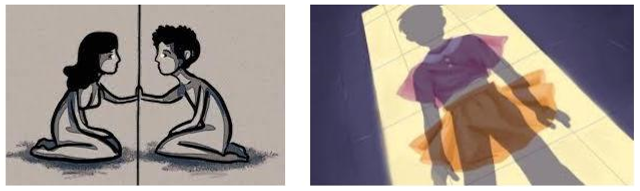
Figure 1. This drawing represents the distressful experiences of gender nonconformity endured by people with dysphoria which are measurable, in terms of intensity, frequency, and duration. Within the clinical parameters of the DSM-5 and also following WPATH Standards of Care for proceeding with the diagnosis and the surgical reassignment procedures, a duration of at least six-continuous months of this intense discomfort as baseline criteria is required for hormonal treatment. For genital (bottom and/or top) reassignment surgery in adult individuals (16-18 years old) a real-life experience (RLE) of at least 12 continuous months living full time in the affirmed gender is required [1-3].
From a biological perspective, most likely gender identity is established and organized in the brain prenatally during fetal development and under the influence of certain genetic and/or hormonal factors. Under the microscope and since 1995 [4-7] there were found some brain structures in transexual individuals are more similar to those of the gender which they identify than to those of their genetic sex assigned at birth [4-7]. Consequently, it would make no sense to invest in psychiatric chemical-pharmacological or behavioral mechanical-physical therapies which were aimed to cure them by suppressing or through conditioning, trying to change their minds or letting time pass until the stage is overcome, because that is an intrinsic and permanent biological characteristic, not a choice conditioned by reinforcements or a purely medical-psychiatric disorder. The brain is already defined at birth for gender identity. Nevertheless, the care and counselling of professional and educated psychologists and physicians are required in terms of better transitional processes (Figure 2). When puberty or adolescence arrives, the hormonal surge could activate the brain circuit of gender identity towards the one previously established or organized during gestation.
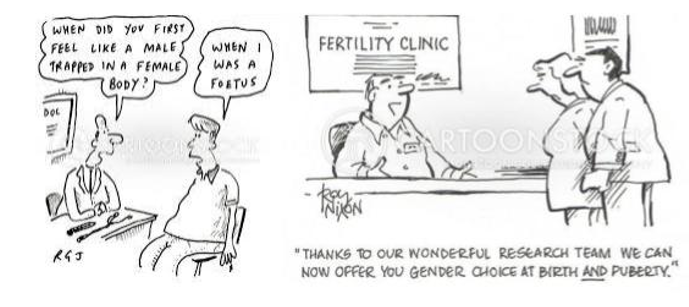
Figure 2. These comics are ironically highlighting the senselessness of unlimited human intervention in determining people's gender, since the percentage of patients with dysphoria is very small in the general population. Gender identity is an intrinsic and permanent biological characteristic, likely established by genes and hormones early in neuronal and brain development. Moreover, humor, which comes from the Latin word "oris", means liquid and it is a psychological mechanism for relieving tension and coping with stressful situations, which might be the current case for this line of research. When solidity obstructs the flow of things, making reality fluid with humor helps circulation and continuity.
There are a number of reasons to logically consider sexual orientation and gender dysphoria as different processes in our brains [4-7]. For instance, it is widely accepted, since Kinsey’s scales, there are many grades in sexuality, defined as a continuum from 0 to 6, from exclusive heterosexual behavior to exclusive homosexual behavior. While for transsexual individuals there are only two categories (male to female -MtF- and female to male -FtM-). Although inside the gender dysphoria a third one can be also considered in cases of gender indeterminacy at birth [8-11]. Most people report a simple binary gender identity, some report gender identities that lie between all male and all female, but a large Dutch study among 8064 people revealed that 3.2% to 4.6% of individuals reported an ambivalent gender identity [12]. Currently the paths of gender identity and sexual orientation in the brain from the biological perspective are broadened and widely helping to understand and explain our nature depending on different hormones, their actions and reactions in a human lifespan. Consequently, diagnosis, laws, treatments and social care should be according to these scientific neuroanatomic, biologicist and neuroscientific research results.
Usually the gender assigned at birth is that one corresponding to the chromosomal information because the vast majority of the world´s population experience a match between their genetic sex and their gender identity. But in a small minority, some dissonance exceptions in specific cases might happen (in demographic studies 1-2% of the general population) [13]. That is the reason why this genetic criterion is used because these two parameters (chromosomes-gender) are practically equivalent and always correlated in the animal kingdom [14]. However, even the self-identity or self-recognition as the image of their own individuality reflected on a reflective surface of a mirror is not a widespread ability in the animal group: it clearly happens only in higher mammalian species with brains of a precise size and in specific habitats [15]. Transsexualism, as a particular feature of hominid identity, is an inherently humanoid property which is attached to the particular resources of our evolutionarily larger, social and visual brains which have developed in a concrete human environment (Figure 3). Therefore, the study and research of transsexuality as an extreme manifestation of gender dysphoria become essential to broadening our understanding of gender male and female and, consequently, of our own human nature. This study and research also aim to protect and support transgender and/or gender dysphoric people, expanding our knowledge to a better understanding for caring for them.
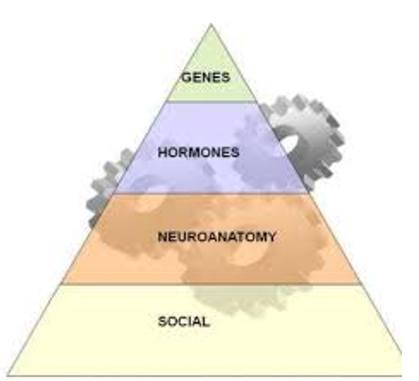
Figure 3. This diagram represents the hierarchical, stratified, and iceberg-like organization of the components that make up gender identity. Thus, although society occupies the largest space, it is the last to have a significant impact on gender identity, which most probably is established prenatally in the brain, due to genetic, hormonal, and neuroanatomical factors and is not a purely construct shaped by society. Gender identity seems a durable, biological phenomenon that is not customized by external forces. No environmental influence on gender identity has been identified to date [11,16].
Regardless of how and despite this unique human trait nature, there is still much confusion surrounding transsexualism and/or gender dysphoria because of its dissertation's huge complexity. That puzzlement to the extreme might conducts to patient maltreatments, such as emotional, physical or sexual abuse and/or neglect toward gender dysphoric patients [11,17]. Similarly, to other marginalized populations in minority, transgender patients recurrently experience discrimination in their healthcare setting: commonly and unfortunately they may not have access to medical balanced professionals who can provide competent care [18].
For this revision, the inclusion and exclusion criteria for the literature reviewed has been mainly focused on microscopic studies of donor patients with gender dysphoria from the Dutch Brain Bank (Nederlandse Hersenbank). This criterion is based on the existence of rigorous and meticulous specific knowledge of the analyzed samples, their large quantity despite the difficulty of obtaining, careful processing, clear organizing, and precise studying on those donated brains. Moreover, detailed knowledge of each patient while they were alive is kept: hormonal exposure, time of death and the methodology used to extract and process their brains, thus minimizing variability among the studies. These patients, and after voluntary donors, were attended by the Gender Team of the Amsterdam Free University under the best clinical implications framed around ethical, affirming, evidence-informed care for individuals experiencing gender dysphoria. Moreover, neurobiological findings were highly cautiously interpreted with the mediation of the Royal Netherlands Academy of Arts and Sciences (KNAW) (Koninklijke Nederlandse Akademie van Wetenschappen) because they made a follow of the track of the research from the beginning to ensure and guarantee accuracy and authenticity of the procedure and results.
Psyche of Gender: Gender questionnaires
Through history, concepts of feminine and masculine have been modified as it is noticeable in the questionnaires and tests that try to quantify those traits [19]. Not far away in time (1991), with psychoanalytic approaches, male to female transsexualism was understood as a simply deep hatred towards the masculine [20]. Nevertheless, even with those former reductionist perspectives, there were incomprehensible contradictions: when the causes of transsexualism were thought to be defence and detains development, no defence mechanism could possibly exist, because they (detains+defense) were not likely to be linked or happening at the same time, since they are organically discordant systems [20]. Transsexuality, inevitably and irremediably, highlights the struggle between the sexes in human beings, like between two different but complementary sports teams. This struggle changes meaning when takes place within the same person: during fetal development in its embryonic stage (weeks 4-6 of gestation), the bipotential gonad is parallelled directed toward one gender or the other (depending on the presence or absence of the SRY chromosome, code 1-0, testes or ovaries), but the remaining organs, including the brain, can follow alternative paths due to alterations or modifications in hormone levels and/or the expression or non-expression of other specific genes yet to be determined.
Gender questionnaires are valuable and necessary tools for measuring gender identity as a quantifiable trait provided they are based on neuroanatomical findings [19]. These questionnaires include, present, daily life and future projections inside each gender, collecting basic psychological variables such as self-esteem, happiness when identifying as man or woman, comforts or discomfort with gender role behavior or secondary sexual characteristics or the perception of social treatment received in the gender role in present and future perspective. The questionnaires attempt to quantify them using operational definitions and objective measures of frequency, intensity, and duration. The responses might provide a base date and guidance on the person's identity and should provide insights for determining the best possible clinical (medical-psychological) treatment to provide.
As we stated earlier, gender dysphoria is not very common in the general population. About 0.17 to 1.33 cases every 100.000 newborns worldwide [21]. The prevalence for male‑to female (MtF) is estimated at 1: 10,000-45,000, while the female‑to‑male (FtM) is 1: 30,000-200,000, which are certainly small proportions. The ratio is bigger in the MtF cases compared to the FtM (3:1 vs 4:1) [22]. Moreover, gender dysphoria diagnostic and reassignment clinics are usually located then provided only in large cities, so that, although the treatments might be paid for by the state health system, only a very small percentage of the population has access to this healthcare. Consequently, in rural areas, with few populations, or with old mind demeanours, are left out. Continuing with this funnel shape, for instance in Spain and along 10 years of care, a total of 457 adult cases arrived at the hospital asking for gender reassignment treatments and providing their personal clinic historical information. Within those person, 66 cases (14.4%) were missed due to false positives, one suicide, and other diagnostic exclusion criteria. The remaining cases (391) are still receiving treatment [23].
The psychological state of established gender dysphoria patients is still being studied. In some cases, defined psychological diagnoses are imprecisely given to exclude gender dysphoria prognosis. In the psychiatric field, requiring medication to heal, it has been shown in several countries that people with gender identity disorder present more psychiatric problems compared to the general population such as affective (depression, bipolar disorder), stress or anxiety response syndrome, etc. [24]. Those psychiatric problems are considered as priority to be treated, precluding the explicit management of gender dysphoria [25]. In other cases, the psychological assessments are mainly focused on the family of the patients instead of the patient itself. With the purpose of optimizing family support, helping them to better cope with the new changing situation and gender-related decisions [21,25].
Nonetheless, some specific psychological states do occur in gender dysphoric patients and in the general population but they have not received much attention for enhanced therapeutic counselling. Recently it has been Scientifically proven that transgender patients do not want to see the shape bodies of their gender assigned at birth (genetic bodies) and subsequently "deactivate" somehow their visual path when pictures of that gender are shown [26]. The transgender group activates exactly the same brain areas as control groups when looking at body shapes that fit with the gender intersect-desired bodies to their genetic ones. Control groups do the same when looking at their own genetic body shapes. But when cognitive contradiction is high, transgender groups have learned somehow to close that neural visual path not activating the little area surrounded or located in the optic chiasm and the oculomotor nerve. This psychological mechanism of concrete denial could be of adaptive use for them to cope with difficult situations concerning the mirror image. However, when denial encompasses an entire past within a life, in which they belonged to their genetic gender, this adaptive functionality might not be as psychological beneficial. Moreover, the optic chiasm, surrounding regions of these results and the oculomotor nerve information would need to be provided in MNRI coordinates, Z-max and cluster size (mm3) [26].
Neuroanatomical and mosaic perspectives
Neuroanatomical studies under the microscope have revealed some brain structures in transexual patients are more similar to those of the gender which they identify than to those of their genetic sex assigned at birth [4-7] (Figure 4). In recent years, no distinctive brain regions have been found from transsexual brain studies. Due to the computational geometric limitations and the consequent simplicity of the measurement shapes designed, the existing analytic brain programs used for in vivo magnetic resonance imaging techniques are assuming that brain areas have an estimated cylindrical shape. However, that premise does not always correspond to the observed neuroanatomy under the microscope of the structures [5]. This normalization or assumption of form by weighting might also be happening for larger brain structures such as the cerebral cortex (gray matter or neuronal cell bodies) or white matter (myelinated axons). In addition to this assumption, the records reflect data that are not independent but interrelated variables: volume (3D), area (2D) and thickness, being area = volume / thickness [27]. With these measurements, similar conclusions as previous neuroanatomical research under the microscope were found: 1) in transexual individuals there is an intrinsic and different brain morphology that is intermediate in their parameters between those values found for men and women [7,28], and 2) the mosaicism theory is the most appropriate to clarify the phenomenon of sexual differentiation in the human brain [29].
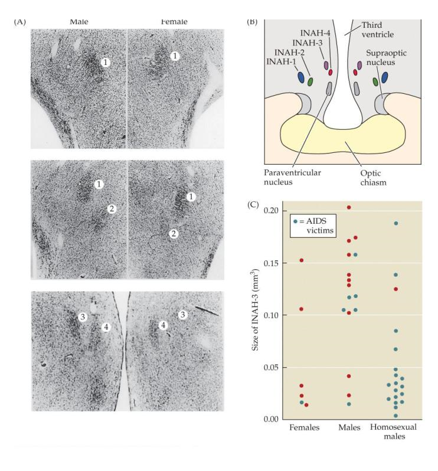
Figure 4. In this enlarged photograph of the human hypothalamus stained with Nissl under the microscope, the four subdivisions of the preoptic area are clearly visible: INAH1 [also known as the sex dimorphic nucleus of the preoptic area (SDN-POA)], INAH2, INAH3 and INAH4. This structure showed a pattern consistent with gender identity in different stainings, independent of genetic sex [4-7,30].
In human beings the sexual differentiation of the genitals occurs in the first two months of pregnancy, whereas the sexual differentiation of the brain begins in the second half. Because these processes happen at different times, they can be influenced independently: specific areas of the human hypothalamus, such as the INAH3 (interstitial nucleus of the anterior hypothalamus), which show sex-specific differences in size and neuron count, in male-to-female transgender individuals, these structures often resemble those typically found in female brains [4-7,31]. Gender identity and sexual orientation are "programmed" into the brain's structure while the fetus is still in the womb and there is no scientific evidence that the social environment after birth plays a significant role in determining an individual's gender identity or sexual orientation [16,31].
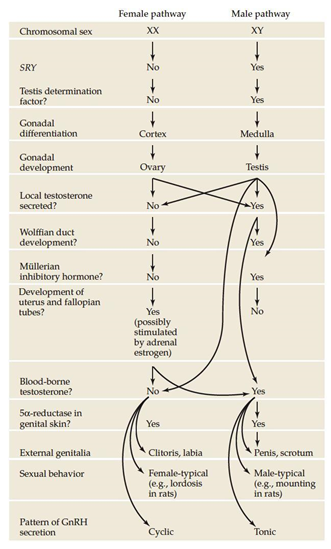
Figure 5. Cascade multi-flow of gender differentiation. This image illustrates the complex biological process of sex determination and differentiation in mammals, comparing the female and male pathways from the chromosomal level to behavior. The presence of SRY Gene (Sex-determining Region Y) activates the Testis-Determining Factor, which instructs the undifferentiated gonad to develop a medulla, forming the testes. The SRY gene is located in the Y chromosome, which is identical to every other chromosome in X shape but lacking an arm. When the X is complete and the SRY gene is not expressed, the gonadal cortex develops naturally into ovaries “in absentia”. In every step since the gonads are formed, there are exceptions and alternative routes, depending on steroid receptors functions, enzyme work and many other little details that are still to be elucidated [30].
The mosaic hypothesis proposes that instead of purely "male" or "female" brains, each individual brain is a unique mosaic [19,29]. This hypothesis would suggest that a person, whatever his/her genetic sex might be, may have some brain characteristics more common in men (i. e. territorialism) and others more common in women (i. e. maternal behavior). These variables would be measured with objective questionnaires and tests such as personality traits that provide data on the satisfaction of the "mosaic person" with the specific role of the activity or behavior for which they are asked and throughout their life (Figure 6). In the last five years, rigorous and meticulous progress has been made on the mosaic brain hypothesis, providing objective and quantifiable data obtained from microscopic analysis of the human brain [19,29].
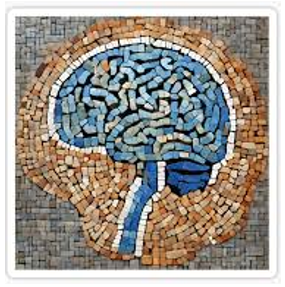
Figure 6. A symbolic representation of what a mosaic brain would look like. The individual tesserae or tile can be seen in the image which correspond to the expression of a male (Y-paternal) or female (X-maternal) chromosome in a particular brain area. In this way, different nuclei of the brain would contain information from both genders in a balanced way.
The androgen receptor (AR) and the absence of its functional activity (as observed in rat models with the testicular feminization mutation, Tfm), causes demasculinization or feminization of several key brain regions located in the hypothalamus and limbic system [32]. The androgen receptor and the degree of its metabolic functionality largely determine the proportion and expression of this brain mosaicism [32,33]. In partially androgen insensitive (testosterone feminized – Tfm) male rats show no reversion of the sex difference in the preoptic area and the bed nucleus of the stria terminalis. Whereas in other brain nuclei, such as the posteromedial amygdala, or the ventromedial hypothalamus, however, were feminized in Tfm male rats showing this mosaicism was present [32].
CONCLUSION
Interest in the scientific investigation and explanation of gender dysphoria and human transsexuality emerged very recently, during the 1980s, when scientific questions were closely linked to social movements. and young people were questioning rigid Victorian norms about morality in gender or sexuality. Transgender people began to be accepted at parties, and from there, interest grew in helping them through medicine, psychobiology (the study of rodents) and science. As is often the case, as investigation is progressing, the questions multiplied with each small answer it is found. Therefore, research on gender identity must be a constant priority in an evolved world adapted to our superior brain, with a larger and more complex cerebral cortex that allows us to have an elaborate self-concept that we recognize in the mirror. This continued research would improve current and few knowledge on the field and would emphasize a compassionate care, and reduction of discrimination for those who suffer with this.
ACKNOWLEDGEMENTS
We thank Professor Swaab of the Netherlands Institute for Neuroscience for his valuable medical collaboration and his honest guidance towards truthful research, without promising coveted targets. We also thank the reviewers for their suggestions and valuable improvements. No artificial intelligence (AI) tools were used in the elaboration of this revision.
CREDIT OF IMAGES
Photographs presented in this work come from files with a free license in the public domain as Wikipedia Commons. In other cases, the copyrights belong to their respective owners or in cases where pictures come with authorship from a published paper that has been properly quoted with permissions.
REFERENCES
- Blanchard R. (1993). Partial versus complete autogynephilia and gender dysphoria. J Sex Marital Ther. Winter. 19(4):301-307.
- Cohen-Kettenis PT, Gooren LJ. (1999). Transsexualism: a review of etiology, diagnosis and treatment. J Psychosom Res. 46(4):315-333.
- Hembree WC, Cohen-Kettenis P, Delemarre-van de Waal HA, Gooren LJ, Meyer WJ 3rd, Spack NP, et al. (2009). Endocrine treatment of transsexual persons: an Endocrine Society clinical practice guideline. J Clin Endocrinol Metab. 94(9):3132-3154.
- Zhou JN, Hofman MA, Gooren LJ, Swaab DF. (1995). A sex difference in the human brain and its relation to transsexuality. Nature. 378(6552):68-70.
- Garcia-Falgueras A, Swaab DF. (2008). A sex difference in the hypothalamic uncinate nucleus: relationship to gender identity. Brain. 131(Pt 12):3132-3146.
- Garcia-Falgueras A, Ligtenberg L, Kruijver FP, Swaab DF. (2011). Galanin neurons in the intermediate nucleus (InM) of the human hypothalamus in relation to sex, age, and gender identity. J Comp Neurol. 519(15):3061-3084.
- Savic I, Garcia-Falgueras A, Swaab DF. (2010). Sexual differentiation of the human brain in relation to gender identity and sexual orientation. Prog Brain Res. 186:41-62.
- Chen S, Loshak H. (2020). Primary Care Initiated Gender-Affirming Therapy for Gender Dysphoria: A Review of Evidence Based Guidelines. Ottawa (ON): Canadian Agency for Drugs and Technologies in Health.
- Stafford N. (2013). Germany is first European country to recognise third sex on birth certificates. BMJ. 22:f5249.
- Garcia-Falgueras, A. (2014). Gender Dysphoria and Body Integrity Identity Disorder: Similarities and Differences. Psychology. 5(2):160-165.
- Garcia-Falgueras, A. (2014): Gender Dysphoria in DSM-5: Changes and Continuities. PSBR. 2(3):74-79.
- Kuyper L, Wijsen C. (2014). Gender identities and gender dysphoria in the Netherlands. Arch Sex Behav. 43(2):377-385.
- Khandelwal A, Agarwal A, Jiloha RC. (2010). A 47, XXY female with gender identity disorder. Arch Sex Behav. 39(5):1021-1023.
- Ngun TC, Ghahramani N, Sánchez FJ, Bocklandt S, Vilain E. (2011). The genetics of sex differences in brain and behavior. Front Neuroendocrinol. 32(2):227-246.
- Garcia-Falgueras, A. (2024). Self Recognition and Social Sense in Rodents: T-maze With a Mirror. J Clin Psychol Neurol. 2(4):1-6.
- Korpaisarn S, Safer JD. (2019). Etiology of Gender Identity. Endocrinol Metab Clin North Am. 48(2):323-329.
- Bandini E, Fisher AD, Ricca V, Ristori J, Meriggiola MC, Jannini EA, et al. (2011). Childhood maltreatment in subjects with male-to-female gender identity disorder. Int J Impot Res. 23(6):276-285.
- Libman H, Safer JD, Siegel JR, Reynolds EE. (2020). Caring for the Transgender Patient: Grand Rounds Discussion From Beth Israel Deaconess Medical Center. Ann Intern Med. 172(3):202-209.
- Garcia-Falgueras, A. (2019). Gender Identity as a Trait to Measure in Questionnaires. Psychol Behav Sci Int J. 12(4):1-4.
- Oppenheimer A. (1991). The wish for a sex change: a challenge to psychoanalysis? Int J Psychoanal. 72(Pt 2):221-231.
- Chen S, Loshak H. (2020). Primary Care Initiated Gender-Affirming Therapy for Gender Dysphoria: A Review of Evidence Based Guidelines [Internet]. Ottawa (ON): Canadian Agency for Drugs and Technologies in Health.
- Meybodi AM, Jolfaei AG. (2022). Evaluation of personality disorders in patients with Gender Identity Disorder (GID): An update. J Family Med Prim Care. 11(6):3196-3202.
- Expósito-Campos P, Gómez Balaguer M, Hurtado Murillo F, Pena Dubra A, de Miguel Rodríguez LF, Fernández Collazo P, et al. (2025). Psychological assessment and counseling remain important features of quality care: A descriptive study of individuals who did not start gender-affirming medical treatment in a gender identity unit in Spain. Endocrinol Diabetes Nutr (Engl Ed). 72(2):101533.
- Heylens G, Elaut E, Kreukels BP, Paap MC, Cerwenka S, Richter-Appelt H, et al. (2014). Psychiatric characteristics in transsexual individuals: multicentre study in four European countries. Br J Psychiatry. 204(2):151-156.
- Ernst MM, Kogan BA, Lee PA. (2020). Gender identity: A psychosocial primer for providing care to patients with a disorder/difference of sex development and their families [individualized care for patients with intersex (Disorders/differences of sex development): Part 2]. J Pediatr Urol. 16(5):606-611.
- Majid DSA, Burke SM, Manzouri A, Moody TD, Dhejne C, Feusner JD, et al. (2020). Neural Systems for Own-body Processing Align with Gender Identity Rather Than Birth-assigned Sex. Cereb Cortex. 30(5):2897-2909.
- Mueller SC, Guillamon A, Zubiaurre-Elorza L, Junque C, Gomez-Gil E, Uribe C, et al. (2021). The Neuroanatomy of Transgender Identity: Mega-Analytic Findings From the ENIGMA Transgender Persons Working Group. J Sex Med. 18(6):1122-1129.
- Segovia S, Garcia-Falgueras A, Perez-Laso C, Pinos H, Carrillo B, Collado P, et al. (2009). The effects of partial and complete masculinization on the sexual differentiation of nuclei that control lordotic behavior in the male rat. Behav Brain Res. 196(2):261-267.
- Joel D, Garcia-Falgueras A, Swaab D. (2020). The Complex Relationships between Sex and the Brain. Neuroscientist. 26(2):156-169.
- Nelson RJ, Kriegsfeld LJ. (2017). An Introduction to Behavioral Endocrinology (5th ed.). Sinauer Associates, Oxford University Press.
- Garcia-Falgueras A, Swaab DF. (2010). Sexual hormones and the brain: an essential alliance for sexual identity and sexual orientation. Endocr Dev. 17:22-35.
- Garcia-Falgueras A, Pinos H, Collado P, Pasaro E, Fernandez R, Jordan CL, et al. (2005). The role of the androgen receptor in CNS masculinization. Brain Res. 1035(1):13-23.
- Garcia-Falgueras A, Pinos H, Collado P, Pasaro E, Fernandez R, Segovia S, et al. (2005). The expression of brain sexual dimorphism in artificial selection of rat strains. Brain Res. 1052(2):130-138.
