Information Links
Previous issues
Related Conferences
Previous Issues Volume 9, Issue 8 - 2025
Some Bacterial Infections in Rabbits: Pathogenesis, Hematological Alterations, and the Therapeutic Potential of Selenium Nanoparticles
Fatma MA Yousseff1,*, Basmala A Kotb2, Ghufran G Oyoun3, Menna A Essam4, Fatma A Shalaby5
1Clinical Pathology Department, Animal Health Research Institute, Ismailia Branch, Agriculture Research Centre (ARC), Egypt
2Biotechnology Program, Faculty of Science, Helwan University, Egypt
3Medical Laboratory Technology Department, Faculty of Applied Health Science Technology, Misr University for Science and Technology, Egypt
4Chemistry Zoology Department, Faculty of Science, Cairo University, Egypt
5Biotechnology Department, Faculty of Agriculture, Cairo University, Egypt
*Corresponding author: Fatma MA Yousseff, Clinical Pathology Department, Animal Health Research Institute, Ismailia branch, Agriculture Research Centre (ARC), Egypt, Phone: 01025250063, E-mail: [email protected]
Received Date: September 04, 2025
Published Date: December 26, 2025
Citation: Yousseff FMA, et al. (2025). Some Bacterial Infections in Rabbits: Pathogenesis, Hematological Alterations, and the Therapeutic Potential of Selenium Nanoparticles. Mathews J Vet Sci. 9(8):94.
Copyrights: Yousseff FMA, et al. © (2025).
HIGHLIGHT
- Major rabbit pathogens (Pasteurella multocida, Staphylococcus aureus, and pathogenic E. coli) trigger marked hematological, biochemical, immune, and oxidative disturbances.
- Infections are associated with leukocytosis, inflammatory cytokine activation, oxidative imbalance, and multi-organ dysfunction.
- Host susceptibility varies and is influenced by SNPs in immune- and antioxidant-related genes.
- Selenium nanoparticles (SeNPs) enhance antioxidant capacity, normalize hematological and biochemical markers, and modulate innate and adaptive immunity.
- SeNPs exhibit direct antibacterial effects and improve resistance to bacterial infections.
- Integrating SeNP supplementation with genetic susceptibility insights may reduce antibiotic reliance and strengthen rabbit health programs.
ABSTRACT
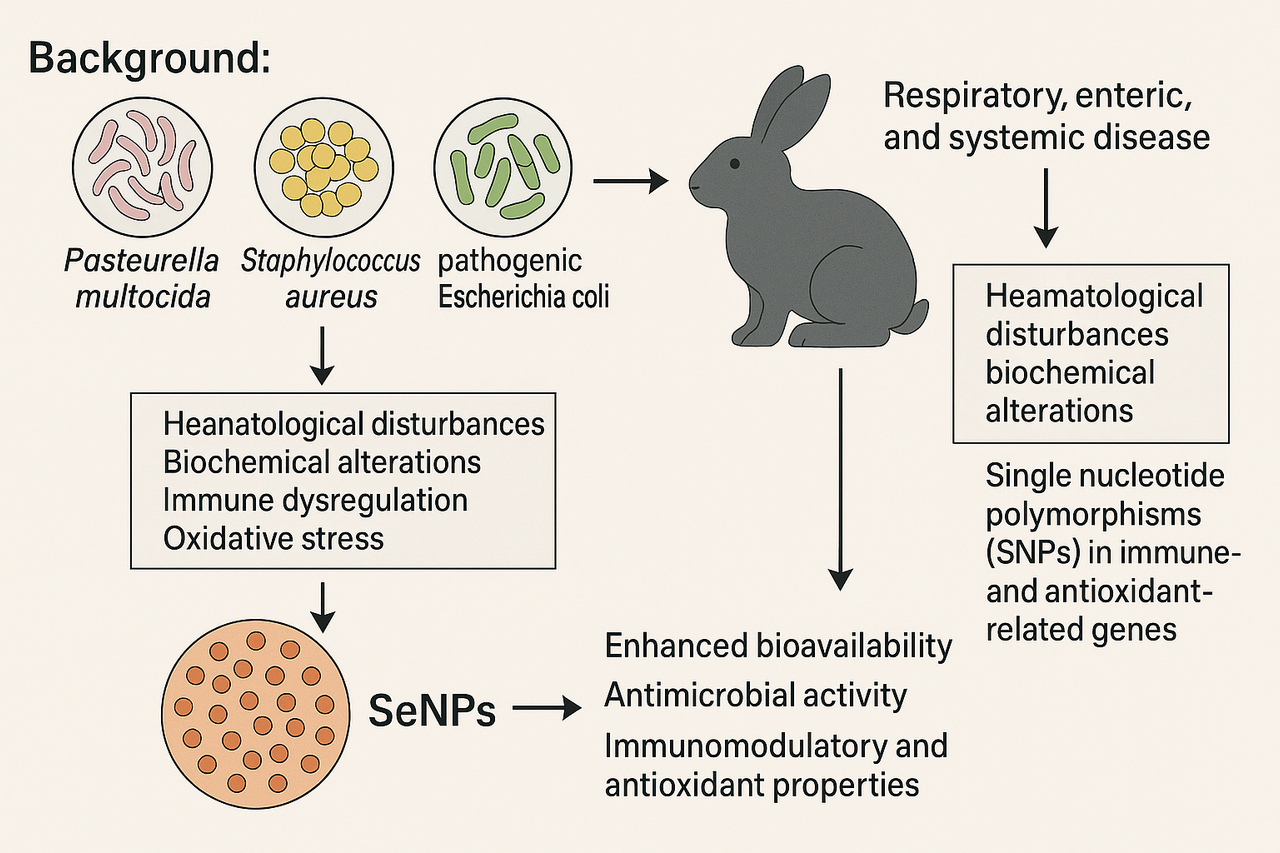
Background: Pasteurella multocida, Staphylococcus aureus, and pathogenic Escherichia coli are major bacterial pathogens affecting rabbits, causing respiratory, enteric, and systemic disease. These infections induce marked hematological disturbances, biochemical alterations, immune dysregulation, and oxidative stress. Host susceptibility varies and is influenced by single nucleotide polymorphisms (SNPs) in immune- and antioxidant-related genes. Selenium nanoparticles (SeNPs) have recently gained attention due to their enhanced bioavailability, antimicrobial activity, and immunomodulatory and antioxidant properties. Aim: To synthesize current knowledge on the hematological, biochemical, immune, and oxidative effects of major bacterial infections in rabbits and to evaluate the potential mitigating role of SeNPs. Methods: A structured literature search (2020–2025) was conducted using PubMed, Web of Science, Scopus, and Google Scholar. Eligible studies included in vivo rabbit research involving P. multocida, S. aureus, or pathogenic E. coli, and investigations assessing hematological, biochemical, oxidative, or immune responses, with or without SeNP supplementation. Findings were integrated through a narrative synthesis due to heterogeneity in study designs and outcomes. Results: Across the reviewed studies, infections consistently produced leukocytosis with neutrophilia, lymphocyte suppression, reduced albumin, elevated globulins, and increased hepatic and renal biomarkers. Strong oxidative imbalance was evident through elevated malondialdehyde and reduced activities of GPx, SOD, and CAT. SeNP supplementation improved antioxidant capacity, restored hematological and biochemical indices, modulated cytokine responses, enhanced innate and adaptive immunity, and demonstrated direct antibacterial activity against major pathogens. Benefits were most pronounced under conditions of oxidative stress or in rabbits with SNPs linked to impaired antioxidant or immune pathways. Conclusion: Bacterial infections in rabbits produce systemic disturbances that extend beyond localized lesions and are further modulated by genetic susceptibility. SeNPs represent a promising supportive tool due to their antimicrobial, antioxidant, and immunomodulatory actions. Their integration into rabbit health programs may help mitigate infection severity, reduce antibiotic reliance, and support more sustainable disease-control strategies. Future work should focus on optimizing SeNP formulations, clarifying dose–response relationships, and validating long-term safety in field conditions.
Keywords: Selenium Nanoparticles, Rabbit Infection, Oxidative Stress, Immunity, Hematology, SNP Genetics.
