Information Links
Related Conferences
Current Issue Volume 11, Issue 1 - 2026
Autosomal Recessive Syndromic Hinman Syndrome: A New Variant
Aamir Jalal Al-Mosawi*
Advisor Doctor and Expert Trainer, Baghdad Medical City and Iraqi Ministry of Health Baghdad, Iraq
*Corresponding Author: Aamir Jalal Al-Mosawi, Advisor Doctor and Expert Trainer, Baghdad Medical City and Iraqi Ministry of Health Baghdad, Iraq, Email: [email protected]
Received Date: December 22, 2025
Published Date: March 05, 2026
Citation: Al-Mosawi AJ. (2026). Autosomal Recessive Syndromic Hinman Syndrome: A New Variant. Mathews J Pediatr. 11(1):49.
Copyrights: Al-Mosawi AJ. © (2026).
ABSTRACT
Background: Nonneurogenic neurogenic bladder, or Hinman syndrome, is traditionally considered a functional voiding disorder in children without neurological or anatomical abnormalities. While often acquired, recent data suggest possible congenital or familial forms. Objective: To describe a unique familial cluster of Hinman syndrome in three sisters from Iraq, highlighting a likely autosomal recessive inheritance pattern and potential syndromic features. Patients and Methods: Three female siblings born to consanguineous parents presented with vesicoureteral reflux and symptoms consistent with Hinman syndrome. The eldest progressed to chronic renal insufficiency. All were treated with oral alfuzosin. Clinical assessment included evaluation of dysmorphic features and cognitive development. Parents and patient consents and the appropriate approval by the ethics committee have been ensured. Results: Alfuzosin therapy resulted in significant symptom improvement, with the eldest no longer requiring catheterization. The youngest sister exhibited multiple facial dysmorphic features alongside preserved cognitive function. The pattern of inheritance and clinical phenotype suggests a syndromic, autosomal recessive form of Hinman syndrome. Conclusion: This case series expands current understanding of Hinman-like disorders, indicating a possible genetic etiology. Early recognition and medical management with alpha-blockers may help preserve renal function and reduce complications.
Keywords: Hinman Syndrome, Neurogenic Bladder, Pharmacologic Management.
INTRODUCTION
Nonneurogenic neurogenic bladder, historically referred to as Hinman syndrome, is a rare condition that mimics neurogenic bladder but occurs in the absence of identifiable neurologic or anatomical anomalies. First reported by Hinman and Baumann in 1973 and further characterized by Allen in 1977, this disorder is marked by functional vesicourethral obstruction, detrusor-sphincter dyssynergia, and upper tract deterioration, often leading to renal failure if unrecognized or untreated.
Although traditionally viewed as an acquired functional disorder in older children, growing evidence including early reports from Iraq suggests the presence of congenital or familial forms, sometimes manifesting as early as infancy [1,2].
In a landmark Iraqi series, Al-Mosawi (2007) described seven boys with nonneurogenic neurogenic bladder diagnosed in infancy. These patients presented with urinary retention, bilateral hydroureteronephrosis, and were frequently misdiagnosed with posterior urethral valves. The absence of spinal abnormalities and the exclusion of anatomic obstruction on cystoscopy reinforced the diagnosis of Allen-Hinman syndrome. Four of those patients progressed to end-stage renal failure, highlighting the critical need for early diagnosis and intervention [1].
More recently, Al-Mosawi (2024) reported the successful use of oral alfuzosin in managing a case of neurogenic bladder in a male patient with a history of imperforate anus and persistent hydroureteronephrosis. Treatment with alfuzosin significantly improved bladder emptying and preserved renal function, providing evidence for pharmacologic management in place of or in addition to surgical options [2].
We have previously reported an uncountable number of the first described disorders in Iraq [3-5].
In this paper we report a unique familial occurrence suggests a previously undescribed autosomal recessive variant of Hinman-like syndrome, potentially representing a novel syndromic entity.
PATIENTS AND METHODS
A unique familial cluster involving three Iraqi sisters presenting with features consistent with non-neurogenic neurogenic bladder dysfunction. The siblings were born to consanguineous parents.
The eldest sister progressed to chronic renal insufficiency, while the youngest exhibited notable facial dysmorphic features but retained normal cognitive function.
The parents had six daughters, among them; three sisters were diagnosed with non-neurogenic neurogenic bladder dysfunction. The eldest, aged 15 years, had significant bilateral vesicoureteral reflux on ultrasound and eventually developed chronic renal insufficiency. Her condition had been managed with intermittent catheterization, which was complicated by recurrent urinary tract infections. The two younger sisters, aged 5 and 7 years, also demonstrated ultrasound evidence of vesicoureteral reflux.
RESULTS
All three affected sisters were treated with oral alfuzosin, in accordance with the recommendations of Al-Mosawi (2024) [2]. Treatment resulted in symptomatic improvement in all three, and in the eldest sister, catheterization was no longer required.
The youngest sister (Figure-1) displayed multiple facial dysmorphic features, including:
1. Frontal bossing: Prominent forehead
2. Mild hypertelorism: Increased distance between the inner canthi
3. Flat midface: Underdeveloped nasal bridge and midfacial region
4. Thin upper lip and smooth philtrum
5. Mild micrognathia: Slightly recessed chin
6. Ear morphology: Low-set and posteriorly rotated ears
7. Long philtrum
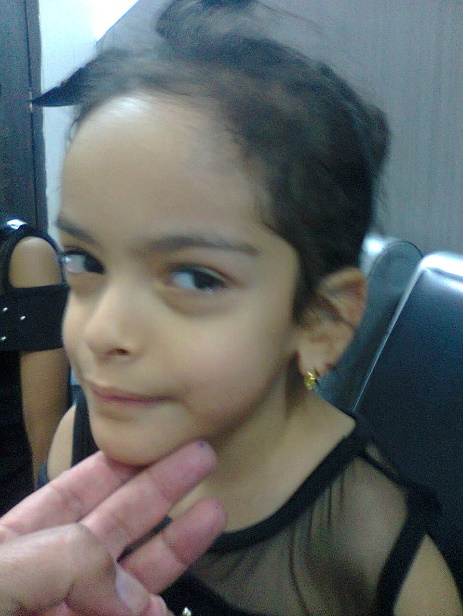
Figure 1. The youngest sister displayed multiple facial dysmorphic features.
Despite these features, the youngest sister exhibited normal social engagement and age-appropriate cognitive abilities at clinical evaluation. No other overt abnormalities were observed.
The older two sisters were suspected to have had similar, though less pronounced, facial dysmorphic features.
DISCUSSION
The classic understanding of Hinman syndrome as a learned behavioral voiding dysfunction in older children is increasingly challenged by cases like those described in Iraq.
In Al-Mosawi's 2007 series, patients developed severe complications early in life, with urologists initially suspecting posterior urethral valves. Cultural barriers to intermittent catheterization further complicated management, leading to delays in appropriate treatment and renal deterioration.
In Al-Mosawi’s 2007 series, some patients had already reached end-stage renal failure by the time of referral, underscoring the aggressive nature of this condition when unrecognized in infancy. In resource-limited or culturally constrained settings like Iraq, where clean intermittent catheterization is often rejected, early surgical options such as cutaneous vesicotomy proved effective in halting renal deterioration [1].
Our case series aligns with and expands upon these earlier findings. The involvement of three siblings, all female, born to consanguineous parents, strongly indicates a genetic etiology. Facial dysmorphism in the youngest sister, coupled with normal intellect, suggests the possibility of a mild syndromic form not previously documented.
Our current familial cases share many of the same urological complications: vesicoureteral reflux, hydroureteronephrosis, and high postvoid residuals, but it is striking in that all three affected children are female, and the disorder occurred within a single consanguineous pedigree. This is in contrast to earlier reports where affected children were predominantly male and sporadic, suggesting a possible shift from an idiopathic or functional pathology to a genetically-mediated one [1].
Al-Mosawi's 2024 report further supports the pharmacological management of such dysfunction. His use of long-term oral alfuzosin resulted in notable improvement in bladder dynamics and preservation of renal function in a 17-year-old boy with prior anorectal anomalies. This aligns with findings from Schulte-Baukloh et al. (2002), who demonstrated that alfuzosin reduced detrusor leak-point pressure in children with neurogenic bladder and avoided the need for catheterization [2].
The positive response to alfuzosin especially in the eldest sister is consistent with prior literature, including Al-Mosawi's 2024 report and earlier studies showing that alpha1-adrenergic blockers can improve bladder outflow and reduce the need for catheterization. Schulte-Baukloh et al. (2002) and Yeung et al. (2021) similarly demonstrated that alfuzosin can lower leak-point pressures in children and preserve ejaculatory function in adults, respectively [2].
This familial occurrence likely represents a novel autosomal recessive syndrome characterized by nonneurogenic neurogenic bladder, subtle dysmorphism, normal cognition, and potential responsiveness to alpha-blocker therapy. Further genetic testing, such as whole-exome sequencing, is warranted to define the underlying mutation and facilitate earlier recognition in similar cases.
The identification and characterization of novel clinical disorders and syndromes are critical for expanding diagnostic frameworks, guiding therapeutic interventions, and understanding the genetic and pathophysiological mechanisms of disease. Rare and previously unrecognized conditions often emerge through individual case reports and clinical observations, offering insight into unique disease patterns that may not fit established categories.
The present case series provides strong evidence for a previously unrecognized autosomal recessive variant of Hinman-like syndrome in an Iraqi family.
Given the facial dysmorphism in the youngest sibling of our case, a syndromic or genetic form of bladder dysfunction must be considered. While conditions such as urofacial syndrome (Ochoa syndrome) come to mind, the absence of grimacing and normal cognition point toward a novel autosomal recessive condition, possibly related to, but distinct from Hinman or Ochoa syndromes.
These findings highlight the urgent need for genetic testing, including whole exome sequencing, in families showing multiple affected siblings. Recognition of this pattern could facilitate earlier diagnosis, avoidance of invasive procedures, and targeted therapy using agents such as alfuzosin, which has shown promise in both classic and syndromic cases.
Recognition of such patterns is essential for early diagnosis, renal preservation, and family counseling. Pharmacologic intervention with alfuzosin appears promising as a noninvasive management strategy.
CONCLUSION
This familial case series presents compelling evidence for a previously unrecognized autosomal recessive variant of Hinman syndrome. The presence of consistent bladder dysfunction across siblings, dysmorphic features in the youngest patient, and a positive response to alpha-blocker therapy suggest a mild syndromic form of nonneurogenic neurogenic bladder. These findings emphasize the importance of considering a genetic basis in similar cases, especially in regions with high consanguinity.
ACKNOWLEDGEMENT
The author would like to express his gratitude for the parents of the patients who accepted publishing the photo of their child.
CONFLICT OF INTEREST
None.
REFERENCES
- Al-Mosawi AJ. (2007). Identification of Nonneurogenic Neurogenic Bladder in Infants. Urology. 70(2):355-357.
- Al-Mosawi AJ. (2024). The Rare Association of Imperforate Anus with Neurogenic Bladder Dysfunction and Later Development of Retrograde Ejaculation. Int J Pharm Biol Arch. 15(4):119-122.
- Al-Mosawi AJ. (2025). New Clinical Disorders, Including Genetic and Dysmorphic Syndromes. LAP LAMBERT Academic Publishing. ISBN: 978-620-8-06396-2.
- Al-Mosawi AJ. (2020). Clinical Genetics and Dysmorphology: Our Extraordinary Experiences. SunKrist Journal of Neonatology and Pediatrics. 2(1):1-10.
- Al-Mosawi AJ. (2025). A Novel autism facial dysmorphism syndrome. LAP LAMBERT Academic Publishing. ISBN: 978-3-659-64824-3.
