Information Links
Related Conferences
Current Issue Volume 10, Issue 1 - 2026
Immediate Hypersensitivity Reaction During Facial Collagen Mesotherapy in a Patient with Previous Tolerance: A Case Report
Yilmaz Sezgin1,*, Sinan Becel2
1Family Medicine Department, Trabzon University Medicine Faculty, Trabzon, Turkey
2Emergency Medicine, Kolon Hospital, Şişli, İstanbul, Turkey
*Corresponding author: Yilmaz Sezgin, MD. Family Medicine Clinic, Medicine Faculty, Trabzon Üniversity, Turkey & Kanuni Training and Research Hospital, Kaşüstü Neighbourhood, Yomra, Trabzon, Turkey, Tel: +905383425644, E-mail: [email protected]
Received Date: March 27, 2026
Published Date: April 16, 2026
Citation: Sezgin Y, et al. (2026). Immediate Hypersensitivity Reaction During Facial Collagen Mesotherapy in a Patient with Previous Tolerance: A Case Report. Mathews J Emergency Med. 10(1):70.
Copyrights: Sezgin Y, et al. © (2026).
ABSTRACT
Mesotherapy is widely used in aesthetic dermatology for skin rejuvenation. Although collagen-based formulations are generally considered safe, unexpected adverse reactions may occur. We report a case of an acute hypersensitivity reaction that developed during full-face collagen mesotherapy in a patient who had previously tolerated the same treatment without complications. Within minutes after the injections began, the patient developed sudden diffuse facial erythema. The procedure was immediately discontinued, and intravenous antihistamine therapy was administered, resulting in rapid clinical improvement. No systemic symptoms or delayed reactions were observed during follow-up. This case highlights that hypersensitivity reactions may arise unexpectedly even in previously tolerant individuals and emphasizes the importance of early recognition and prompt management during aesthetic procedures.
Keywords: Mesotherapy, Hypersensitivity, Facial Collagen.
INTRODUCTION
Mesotherapy is a minimally invasive technique involving intradermal injections of pharmacological products or biological molecules for therapeutic and/or cosmetic purposes. In aesthetic dermatology, it is commonly used for facial rejuvenation, improving skin hydration, and stimulating dermal regeneration [1].
Mesotherapy formulations frequently utilize a variety of substances, including vitamins, amino acids, peptides, hyaluronic acid, and collagen [2]. Collagen-based preparations are particularly popular due to their role in preserving dermal structure and stimulating fibroblast activity [3].
Although mesotherapy is generally considered a safe procedure, various side effects have been reported in the literature [4]. These include transient erythema, edema, bruising, panniculitis, granulomatous inflammation, and hypersensitivity reactions [5]. Although sudden allergic reactions during aesthetic procedures are rare, they are clinically important because they can develop rapidly during treatment and require emergency intervention [6].
Immediate (Type I) hypersensitivity is an IgE-mediated immune response that develops rapidly after exposure to a specific allergen. During the initial sensitization phase, allergens stimulate T lymphocytes, which promote B lymphocytes to produce allergen-specific IgE antibodies. These IgE molecules bind to receptors on mast cells and basophils. Upon subsequent exposure, the allergen cross-links the bound IgE on these cells, triggering their activation and degranulation. This leads to the release of mediators such as histamine, leukotrienes, and prostaglandins, resulting in vasodilation, increased vascular permeability, bronchoconstriction, and mucus secretion, which underlie clinical manifestations like allergic rhinitis, urticaria, and anaphylaxis [7].
In this report, we describe an acute hypersensitivity reaction that developed during facial collagen mesotherapy in a patient who had previously undergone the same procedure without complications.
CASE PRESENTATION
A 41-year-old female patient presented to our clinic for facial skin rejuvenation treatment. Her main complaints included decreased skin elasticity, fine wrinkles, and a general loss of skin radiance. The patient had no known drug allergies. She reported no history of atopic disease, autoimmune disorders, or chronic dermatological conditions. The patient was not regularly taking any medications and had no recent history of infection, vaccination, or systemic disease.
Approximately six months prior to the current visit, the patient underwent facial collagen mesotherapy at our clinic using the same product. The previous session was completed without complications, and the patient tolerated the treatment well. Following clinical evaluation, full facial collagen mesotherapy was planned. Standard antiseptic skin preparation was performed prior to the procedure.
Intradermal microinjections were initiated using a collagen-based mesotherapy solution; a severe allergic reaction developed during the procedure. Due to the unusual severity and rapid progression of the reaction, the procedure was immediately stopped. The patient remained hemodynamically stable and did not develop systemic symptoms such as dyspnea, hypotension, dizziness, or angioedema. Intravenous pheniramine maleate diluted in isotonic saline was administered as antihistamine therapy. Shortly after administration, the erythema began to subside, and the patient experienced rapid clinical improvement.
The patient was monitored in the clinic until the reaction subsided; no further symptoms developed during the observation period. Follow-up interviews with the patient revealed no delayed skin or systemic reactions. In this case requiring emergency intervention, laboratory investigations and clinical confirmation could not be performed.
DISCUSSION
In the literatüre a 53-year-old woman who developed local and general complaints 2 months after receiving two collagen injections in both nasolabial folds. She presented asthenia, malaise, polyarthralgia and inflammatory nodular panniculitis in the places of injection as well as on the forearms and lower extremities. Skin testing was compatible with hypersensitivity to collagen [8].
Mesotherapy is a minimally invasive technique widely used in aesthetic dermatology for skin rejuvenation and improving skin quality. While the procedure is generally considered safe, various side effects have been reported. The most common complications include transient erythema, edema, and ecchymosis, while less frequent reactions such as infections, panniculitis, granulomatous inflammation, and hypersensitivity reactions have also been described [1,4,5].
Although hypersensitivity reactions during aesthetic procedures are rare, they are clinically significant due to their rapid onset. Acute hypersensitivity reactions typically occur via immunoglobulin E (IgE) pathways, leading to mast cell activation and the release of inflammatory mediators such as histamine. Clinically, these reactions may manifest as erythema, urticaria, pruritus, or angioedema, and in severe cases, may progress to systemic allergic reactions [6,9].
In our case, an acute hypersensitivity reaction occurred despite the patient having previously tolerated the same treatment. This can be explained by the development of immunological sensitization during the initial exposure, which then leads to a hypersensitivity response in subsequent applications. Allergic reactions, including erythema after mesotherapy, have been reported in the literature [10].
Collagen-based preparations are widely used in aesthetic dermatology due to their roles in maintaining dermal structure and stimulating fibroblast activity. Although purification processes reduce antigenicity, collagen products of animal or marine origin may contain antigenic components that can trigger immune responses in susceptible individuals [3,11].
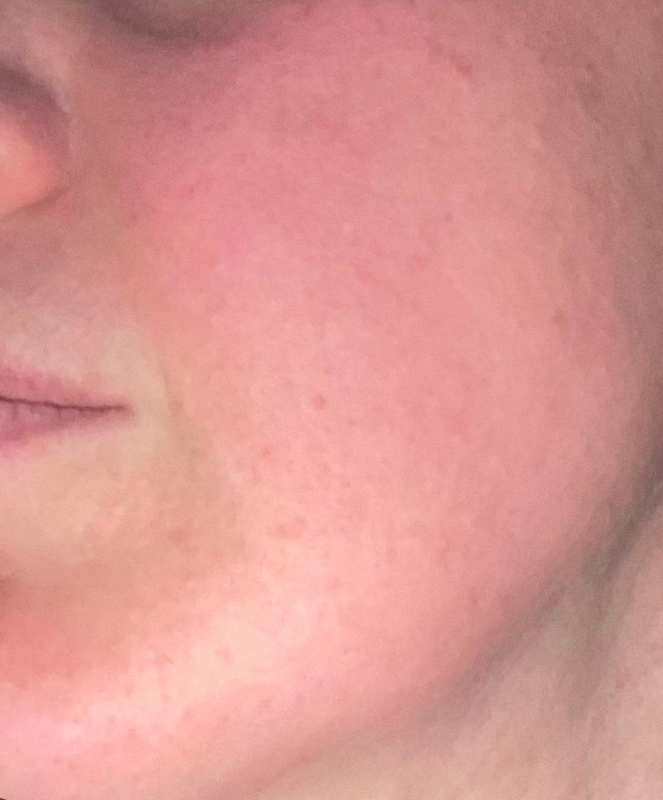
Figure 1. Hypersensitivity Reaction During Facial Collagen Mesotherapy.
CONCLUSION
This case highlights the possibility of abnormal skin reactions during aesthetic mesotherapy and the importance of early intervention. In our patient, immediate administration of intravenous antihistamine therapy led to rapid clinical improvement without systemic side effects. Therefore, a physician performing mesotherapy should possess the knowledge and equipment to provide appropriate emergency management during aesthetic treatments.
Clinical Message
- Hypersensitivity reactions may occur even in patients who previously tolerated mesotherapy treatments.
- Sudden and extensive erythema during injections should raise suspicion for an acute allergic reaction.
- Prompt discontinuation of the procedure and rapid administration of antihistamines can effectively control the reaction.
ETHICS STATEMENT
All procedures performed were conducted in accordance with the principles of the Declaration of Helsinki.
PATIENT CONSENT
Written informed consent was obtained from the patient for publication of this case report and accompanying clinical information.
REFERENCES
- Mammucari M, Maggiori E, Russo D, Giorgio C, Ronconi G, Ferrara PE, et al. (2020). Mesotherapy: From Historical Notes to Scientific Evidence and Future Prospects. Scientific World Journal. 2020:3542848.
- Prikhnenko S. (2015). Polycomponent mesotherapy formulations for the treatment of skin aging and improvement of skin quality. Clin Cosmet Investig Dermatol. 8:151-157.
- Proksch E, Segger D, Degwert J, Schunck M, Zague V, Oesser S. (2014). Oral supplementation of specific collagen peptides has beneficial effects on human skin physiology: a double-blind, placebo-controlled study. Skin Pharmacol Physiol. 27(1):47-55.
- Faetani L, Ghizzoni D, Ammendolia A, Costantino C. (2021). Safety and efficacy of mesotherapy in musculoskeletal disorders: A systematic review of randomized controlled trials with meta-analysis. J Rehabil Med. 53(4):jrm00182.
- Beutler K, Rzepczyk S, Bijata B, Lewandowski J, Bożek B, Świderski P. (2024). Complications associated with needle-based medical aesthetic procedures: clinical and medico-legal aspects from the Polish perspective. Forum Dermatologicum. 10(3):61-70.
- Schroeder MJ, Kraft CT, Janis JE, Kraft MT. (2024). Diagnosis and Treatment of Perioperative Allergic Complications: A Practical Review. Plast Reconstr Surg Glob Open. 12(4):e5734.
- Franjić S. (2025). Briefly about Immediate Hypersensitivity. Mathews J Immunol Allergy. 9(2):37.
- García-Domingo MI, Alijotas-Reig J, Cisteró-Bahima A, Tresserra F, Enrique E. (2000). Disseminated and recurrent sarcoid-like granulomatous panniculitis due to bovine collagen injection. J Investig Allergol Clin Immunol. 10(2):107-109.
- Simons FE, Ardusso LR, Bilò MB, El-Gamal YM, Ledford DK, Ring J, et al. (2011). World Allergy Organization. World allergy organization guidelines for the assessment and management of anaphylaxis. World Allergy Organ J. 4(2):13-37.
- Nijhawan RI, Cohen JI, Kaufman J. (2008). Persistent Erythema After Human Collagen Filler Injections. Cosmet Dermatol. 21(2): 90-94.
- Jadach B, Mielcarek Z, Osmałek T. (2024). Use of Collagen in Cosmetic Products. Curr Issues Mol Biol. 46(3):2043-2070.
