Information Links
Related Conferences
Previous Issues Volume 10, Issue 1 - 2026
Artificial Hatching and Hand-Feeding of Squab
Ashraful Kabir*
Department of Biology, Cantonment Public College, Saidpur Cantonment―5311, Nilphamari, Bangladesh
*Corresponding Author: Ashraful Kabir, Department of Biology, Cantonment Public College, Saidpur Cantonment―5311, Nilphamari, Bangladesh; Email: [email protected]
Received Date: January 14, 2026
Published Date: January 30, 2026
Citation: Kabir A. (2026). Artificial Hatching and Hand-Feeding of Squab. Mathews J Vet Sci. 10(1):100.
Copyrights: Kabir A. © (2026).
ABSTRACT
Heavy-weighed pigeons need to use incubator machine for proper hatching of their eggs. In Bangladesh, this practice is not available because most pigeon breeders keep sufficient number of foster pigeons (gola (local), tumblers or rollers, white king, and racing homer). Few have home incubator machine for hatching of eggs. Additionally, to ensure the longevity of squab of pigeons, sometimes, hand-feeding is a must in a loft. Every year, significant number of squabs die due to lack of hand-feeding. The death of squab is a neglected issue in Bangladesh. Information on incubator machine and hand-feeding from various pigeon farms assisted to complete this paper. After hatching need to hand-feeding squabs up to 40-days (especial emphasis on the first seven days) regular 2-3 times (on average 2 neglected squabs from a pair in a month). A product named CropMilk by Rohnfried was used by a pigeon breeder of Dhaka Bangladesh with significant result, another two were using occasionally (Avi-plus parrot pellet, chicken (broiler) pellet). This study was carried out from January 2022 to December 2025.
Keywords: Incubator, Hand-Feeding, Squab, Foster Pigeons, CropMilk (Rohnfried).
INTRODUCTION
Incubator machine for artificial hatching of squab is important but this trend is not a dominant event in Bangladesh. In large pigeon farm and for heavy-weighed pigeons especially king pigeons or such have less parental care, this incubator machine is the must. In Bangladesh, most breeders have lots of foster pigeons especially tumbler pigeons. They use these pigeons for hatching and such results are significant at all. Some pigeon breeders claim that their Lahore pigeons do not take care of their babies but this incident is few. Most Lahore pigeons of Bangladesh show remarkable breeding performance. Hand-feeding is an ancient method in pigeon farm. CropMilk product of the Rohnfried is available in Bangladesh for the hand-feeding of squab. Sometimes, after hatching, some pigeons do not feed their chick due to many reasons. In this case, pigeon breeders transfer these squabs to another pigeons or hand-fed them. Naturally, pigeons’ crop produces crop milk/pigeon milk and is fed by parents up to 7 days. Pigeon milk contains 9-13% protein, 9-11% fat, 0.9-1.5% carbohydrate, 0.8-1.1% ash, and 0.10-0.12% non-protein nitrogen. Once a time, there were no substitute of crop milk but now there are many effective substitutes in the market. After feeding day-old newborn pigeon then place them into a box where temperature will be 90° F until they are 2-weeks old. A 50-watt bulb will ensure this temperature. The body temperature of pigeon is 107° F [1]. Brood patch temperature is 34-35° F. Average temperature is needed for hatching is observed 27.7° F. and brooder box temperature 90° F. Overall loft temperature (summer/winter) will be 11-29° F and relative humidity (rh) below 65%. Small temperature fluctuations by pigeon eggs in the nest under parental incubation may be the optimal thermal environment for in ovo growth and development [2]. The objective of this study is to ensure artificial hatching and hand-feeding of squab in case of emergency.
MATERIALS AND METHODS
Selected pigeons: This study was performed by using numerous pigeons (own and from other lofts) like gola (local), tumbler-roller, white king, and racing homer. All birds were physically healthy to produce their offspring all the year-round.
Temperature and humidity: In the Guangdong region, the incubation temperature in summer and autumn is 37.9°C-38.3°C as well; in winter and spring, the temperature ranges from 38.1°C to 38.6°C. The incubation humidity in summer and autumn is 50-56%; and winter and spring is 55-60% [3]. The artificial incubation increases yield by 5-20% compared to natural incubation, advances the egg laying by 10-15 days, reduce egg breakage from 10 to 20%, and improves the hatching rate about 10-25% [3].
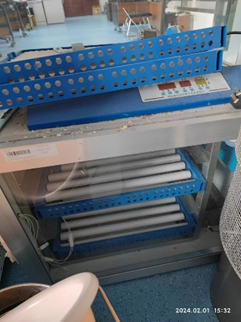
Home incubator machine: Maintain incubator machine’s temperature between 98.6-100.4° F. A digital incubator machine is good for its constant temperature and is found at local hardware/pet store. Take the top off of the styrofoam container. Place a light digital heater within the container; taping all wires; check the wire mesh for protecting egg from the water.
Incubation process: Switch on digital heater to the temperature at 99.8° F. Heated styrofoam container for 3 hours. Mark one side eggs as plus (+) and another minus (–) for rotating. Rotate eggs every 8 hours. Put a thermometer on top of the eggs for checking temperature. Pour ½ cup of distilled water for controlling humidity through the wire mesh to the bottom of the incubator every 24 hours. Repeat until the pigeons start to hatch.
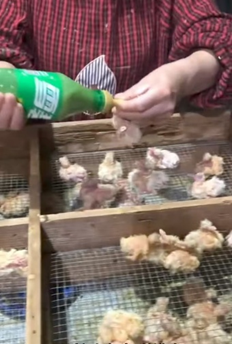
Hand-feeding: Chicken mash crumbles (16%) where protein is found 21% is the best for caring squab. This crumble needs to make as powder by using blending machine. Then soaked powder needs to be mixed with very hot water to milk-shake consistency that would slide through a syringe. After cooling down this stuff, a 60-cc syringe with a wide catheter tip was used two times in a day up to 4 weeks of age. This product actually was developed for the cockatiels but it has significant result on squab. A little sugar water just to peak it up and keep squab from dehydrating [4]. Hand-feeding is the best from the age of four days of pigeons or doves. A few vitamins and Brewer’s yeast can be added with pigeon pellet. This preparation can be stored in fridge up to three days [5].
RESULTS AND DISCUSSION
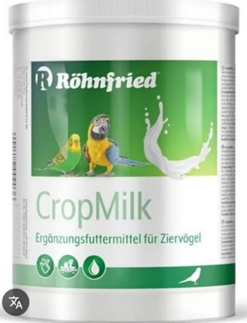
Substitute of crop milk: In local market, there are many substitutes of crop milk. Among them, CropMilk by Rohnfried is commonly used in Bangladesh and its result is outstanding. Besides, following food stuff are used occasionally.
Hand feeding process
Sample 1
Avi-plus parrot breeder pellet (20% protein and 8% fat) that were soaked in water overnight until all of the water had been absorbed. Then cooked in microwave for two minutes until mix well and become runny. The prepared formula can be stored in a sealable food container and kept in refrigerator for up to 24 hours. If the chick hatches in the day, first take water, then feed avi-plus in the afternoon; if late of the day, only drink of water and feed the next day (day-one). Remember that the hatching date of squab is called day zero.
Sample 2
After crushing (dust) the pigeons as usual feed (eg. corn 6 kg, wheat 4 kg, mustard 0.5 kg, rape-seed 2.5 kg, proso-millet 0.5 kg) then mix with boiled cold water and by using a valve (rubber) tube with the tip of the syringe we can use for those squabs [6]. The effectiveness of this stuff needs to proof further.
Sample 3
In Bangladesh, some pigeon breeders provide rice maltase as a crop milk but it needs more clarification to introduce.
Feeding procedure: Squab feed by 2.5 ml pipette by holding chick at 45-degree angle. Added boiled water always (too hot or too cold is discarded always). For larger squab cut the tip of syringe where the chick will insert entire beak. Whole day its crop will be filled up, only night will empty. Humidity should maintain at about 60% (when feces do not come out properly). Experimented squab: These feeding procedures were implemented own rearing pigeons and pigeons from other lofts, in a month, on average 2 neglected squab from a productive pair. After hatching, need to hand-feeding squabs up to 40-days (especial emphasis on the first seven days) with regular 2-3 times.
Growth rate of squab: Overall loft temperature (summer/winter) 11-29° F and relative humidity (rh) below 65% were enough to maintain the growth of hand-feeding squabs. Artificial incubator was not important in this study, but after hatching only neglected squabs were nourished artificially. Small temperature fluctuations at the time of egg laying were not make adverse effect on natural hatching. Pigeon eggs under parental incubation may get the optimal thermal environment for the growth and development of embryo [2]. The incubation humidity in summer and autumn will be 50-56%; and winter and spring 55-60% [3]. The artificial incubation increases yield by 5-20% compared to natural incubation, advances the egg laying by 10-15 days, reduce egg breakage from 10 to 20%, and improves the hatching rate about 10-25% [3]. Since this study did not focus this type of growth indices but physical observation suggested the optimum growth of the hand-feeding squabs. There were no mortality records by hand-feeding squabs. A little sugar water just to peak it up and keep squab from the dehydrating [4]. This study supports this step for the proper growth of squabs at the time of hand-feeding. A few vitamins and Brewer’s yeast can be added with pellet. This preparation can be stored in fridge up to three days [5]. This paper allows this technique. After crushing as usual feed (eg. corn 6 kg, wheat 4 kg, mustard 0.5 kg, rape-seed 2.5 kg, proso-millet 0.5 kg) then mix with boiled cold water and by using a valve (rubber) tube with the tip of the syringe we can use for those squabs [6], and this was also moderate helpful (Sample 2) for the growth of squab with the first sample (Sample 1). Between two samples (Sample 1 and Sample 2), sample 1 was performed the best for the proper growth of squabs at the time of hand-feeding.
CONCLUSIONS
In order to hatch eggs, foster pigeons are more important than incubator machine in Bangladesh. In the case of large, rare, and expensive breeds, we could use it. To minimize the squab death, CropMilk by Rohnfried is the best option for hand-feeding. Moreover, we should maintain the body temperature of squab by using electric bulb in the brooding box. Additionally, we should always try to feed parents crop milk only 1-2 days in order to ensure them to produce natural antibody.
ACKNOWLEDGEMENTS
None.
CONFLICT OF INTEREST
There is no conflict of interest.
REFERENCES
- Rahman MA. (1999). Kingdom of Pigeon (in Bangla). Asia Akhter Khatun, Savar, Dhaka. 83 pp.
- Vatnick I, Foertsch S. (1998). Incubation temperature of the pigeon embryo (Columba livia). Journal of Thermal Biology. 23(1):53-57.
- Wei C, Lianfu C. (2015). A method for artificially incubating pigeon eggs. Claims. p. 1-4.
- Casey V, Martin S. (1988). Hand feeding fancy pigeons. Available at: https://www.ogoc.org/articles/Hand%20Feeding%20Fancy%20Pigeons.pdf
- Vancouver JPH. (1986). Hand-feeding pigeons and doves. afa WATCHBIRD. 13(3):58-63.
- Kabir MA. (2018). Pigeons’ feed at their various stages. International Journal of Research Studies in Zoology. 4(2):21-24.
