Information Links
Related Conferences
Current Issue Volume 4, Issue 1 - 2025
Early Single-Sport Specialization: A Ladder to Success or The Pitfall of Injuries?
Amrinder Singh*, Tanya Sharma, Monika Sharma
Associate Professor & HOD, M.P.T Student, Research Fellow, MYAS –GNDU Department of Sports Sciences & Medicine Guru Nanak Dev University, Amritsar, India
*Corresponding author: Dr. Amrinder Singh, Associate Professor, MYAS- GNDU Department of Sports Sciences and Medicine, Guru Nanak Dev University, Amritsar, Punjab–143005, India, E-mail: [email protected]
Received Date: August 11, 2025
Published Date: October 27, 2025
Citation: Singh A, et al. (2025). Early Single-Sport Specialization: A Ladder to Success or The Pitfall of Injuries? Mathews J Sports Med. 4(1):12.
Copyrights: Singh A, et al. © (2025).
ABSTRACT
Introduction: Early sport specialization is trending amongst young athletes, characterized by intensive year-round training in a single discipline. While many perceive it as a performance enhancer to achieve athletic success, mounting concerns focus on its connection to injury and burnout. Aim of Study: This retrospective study investigates the prevalence and age of single-sport specialization amongst athletes, the incidence of injuries attributed to it, and athletes' perceptions of how it relates to sports-specific injuries. Materials and Methods: A comprehensive survey of 300 male and female athletes from various sports under the Directorate of Sports, Guru Nanak Dev University assessed specialization history, age, training patterns, injury experience, and views on early specialization. Results: Statistical analysis was done using Kruskal-Wallis test and Chi-Square analysis. National athletes exhibited highest specialization rates (93.2%) across the three levels (p < 0.001). Specialization age didn’t differ significantly (p = 0.209). University athletes trained more throughout the year (p = 0.005), state and national athletes competed more (p = 0.001). Specialization led to more injuries in university athletes (p < 0.001). Despite this, 94.25% university athletes believed specialization enhances success (p = 0.02), and 97.08% national athletes were satisfied with their specialization decision (p < 0.001). Most athletes still supported specialization in their children (p = 0.06). Conclusion: This study highlights that while national-level athletes specialized more, specialization age was similar across groups, suggesting it’s non-essential for attaining success. Despite higher injury rates attributed to specialization, university athletes still viewed early specialization to be beneficial for achieving success.
Keywords: Early Specialization, Single Sport-Specialization, Injury Prevalence, Sport-Specific Training.
INTRODUCTION
Early sports specialization (ESS) has gained traction in recent decades, predominantly as competitive youth sports continue to grow in intensity and visibility. ESS is defined as “a systematic training in a single sport at a relatively young age with the goal of attaining elite status” [1]. This trend is prevalent across multiple sports disciplines, with athletes choosing to dedicate most of their time and energy to one sport, often hoping to reach higher levels of athletic success early on. While early specialization may seem to offer advantages such as skill development and competitive edge, it has been increasingly associated with negative outcomes which may be physical, physiological, as well as psychological [2,3]. While some simplify specialization as solely restricting their indulgence to a single sport on a yearly basis, irrespective of training volume [4]. It was also found that young athletes who trained over 8 months/year were more likely to endure injuries [2].
Over the past years, the focus has shifted from youth-driven recreational sports to organized, parent/coach-directed skill development, emphasizing specialization and high-level achievement in one sport [5]. In particular, the highly competitive nature of high school, collegiate, and professional sports have led many young athletes to pursue single-sport specialization early on [6].
As elite-level performance becomes more closely associated with ESS, there lies a growing emphasis on the early identification and training of athletes, a strategy called "deliberate practice" [7], where a focused repetitive training regime is used to accelerate skill development. Ericsson also emphasized that Individuals who start at an earlier age accumulate more deliberate practice, which leads to a higher level of performance and tend to receive more support as well as resources, further reinforcing their advantage. Even if late starters initially improve at a faster rate, the advantage of starting early remains significant.
One of the foremost significant concerns surrounding ESS is its potential to contribute to chronic repetitive injuries in young athletes. The body of research surrounding this topic is extensive, and several studies have linked early specialization to an increased risk of both acute and chronic musculoskeletal injuries [3]. The consistent repetition in sport-specific movements can bring about overloading in certain joints and tissues, increasing the likelihood of developing conditions such as stress fractures, tendinopathies, and muscle strains.
While physical effects of early specialization are more talked about, the psychological impact is considered just as massive. Burnout is considered a mounting concern in competitive sports, it may begin with mild fatigue but when ignored, can snowball into chronic stress in athletes facing intense training demands and psychological pressures. The concept of burnout has advanced over the years with researchers proposing various models to explain its development and consequences. Burnout is defined as “a psychophysiological syndrome characterized by emotional and physical exhaustion, a reduced sense of accomplishment, accompanied by distress and sport devaluation” [8].
The decision for single sport specialization is rarely made in isolation. Coaches, parents, and even peers have been the driving force in encouraging and pivoting the trajectory of young players. It is often the guidance and advice of parents and coaches that leverage the decision to specialize, with many encouraging children to dedicate more time and effort to one sport to secure scholarships, improve rankings, or increase professional prospects [9]. While this guidance may come from a place of good intentions, it can unintentionally put undue pressure on the athlete, often leading to negative outcomes.
Aim of the Study
This study aims to investigate how frequently athletes specialize in a single sport, their rationale behind it, along with the age at which they begin. Additionally, the study seeks to explore if athletes attribute their single-sport focus to any injuries they've experienced. By examining the prevalence of single sport specialization and identifying the age at which it typically occurs, the aim is to provide healthcare professionals and physicians with insights on preventing consequences like sports-related injuries (having close association with early sports specialization) which can additionally assist them in counselling athletes, their parents as well as coaches about the balance that must prevail between sports specific training as well as normal physical training.
MATERIAL AND METHODS
Design: A cross sectional study was conducted to determine the prevalence of specialization in a single sport, retrospectively amongst athletes playing at different level.
Participants: A convenience sample of 300 athletes was taken under the Directorate of Sports, Guru Nanak Dev University and were selected according to inclusion criteria which included both male and female athletes, aged between 18 and 30 years, who were engaged in sport-specific training and competing at the University, State, or National-level. Any athletes who played recreationally, were involved in multiple sports or undergoing non-sports specific training were excluded as mentioned in figure 1 flow chart. The study was approved by the institutional ethical committee of Guru Nanak Dev University, Amritsar, India with approval number no.- 2719/HG dated on 13/05/24. All subjects provided written informed consent before the testing procedures.
.png)
Figure 1. The consort flow diagram of current study.
Procedure: The athletes were approached and reviewed for inclusion and exclusion criteria and selected accordingly, participants were explained that their participation in the study was voluntary, anonymous, and would not affect their sports participation, the consent form was filled and the survey was then conducted by the physiotherapist as a personal interview with face-to-face approach for each athlete in a retrospective fashion (Figure 2). The survey was sourced from Buckley consisting questions related to demographics, current sports commitment, and re-collection of injuries that interrupted sports participation and required specific treatment, future athletic plans, and perspectives on specialization [10].
.png)
Figure 2. This figure demonstrates that, survey was conducted by the physiotherapist as a personal interview with face-to-face approach for each athlete.
RESULTS
Statistical analysis was done using Kruskal Wallis Test for continuous variables between groups whereas, Chi-Square analysis was used for categorical variables (i.e. all yes/no questions).
Table 1. Summary of Survey Demographics
|
Variables |
University Level |
State Level |
National Level |
|
No of survey |
87 |
110 |
103 |
|
Age (y), (mean ± SD) |
20.9 ± 1.86 |
21.1 ± 1.86 |
21.2 ± 1.90 |
|
Gender (male/female %) |
51/36 |
66/44 |
49/54 |
|
At which age did you begin playing competitive sports? (mean ± SD) |
10.68 ±1.9 |
11.11± 2.3 |
10.7 ± 2.1 |
The age distribution and the age of initiating competitive sports across all three levels of competition, exhibit no significant variation (P=0.92;0.50). Gender distribution is also relatively balanced amongst the groups.
Table 2. Summary of Survey Specialization and Injury History Results
|
Variables |
University Level |
State Level |
National Level |
p value |
|
If yes, what age did you quit other sports? y, (mean ± SD) |
11.58 ± 1.209 |
11.70 ± 1.587 |
11.34 ± 1.336 |
0.209 |
|
At the age of specialization, how many months/years did you train for your sport? (mean ± SD) |
8.00 ± 1.086 |
7.53 ± 0.825 |
7.67 ± 0.675 |
0.005 |
|
At the age of specialization, how many months/years did you compete in your sport? (mean ± SD) |
3.93 ± 1.083 |
4.47 ± 0.825 |
4.34 ± 0.630 |
0.001 |
Graph 1 and graph 2 demonstrate distribution of Athletes’ Responses on Sport Specialization and Injury History in different levels of players in sports:

Graph 1. Did you quit other sports to focus on one sport?
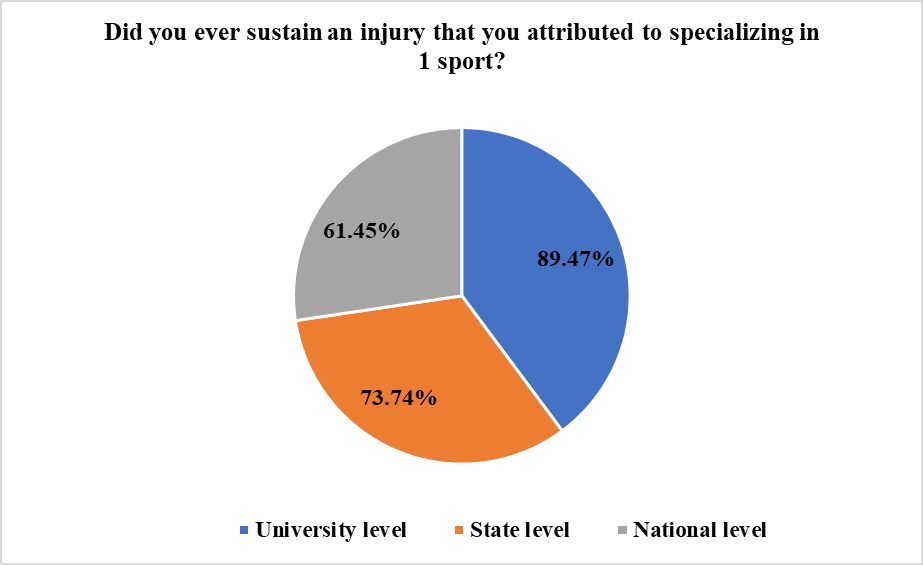
Graph 2. Did you ever sustain an injury that you attributed to specializing in 1 sport?
As summarized in Table 2 and graph 1 & 2, a substantial proportion of national level athletes reported quitting other sports in favor of specializing in a single sport (P <0.001). However, there were no significant differences in the age at which the athletes quit other sports to begin sport specific specialization (P = 0.209). Additionally, athletes at the national and state levels engaged more months competing in their sports (P = 0.005). Whereas, university level athletes were more indulged in year-round training (P = 0.001). A significantly higher percentage of university level athletes reported sustaining an injury attributed to specialization across all three levels (P <.001).
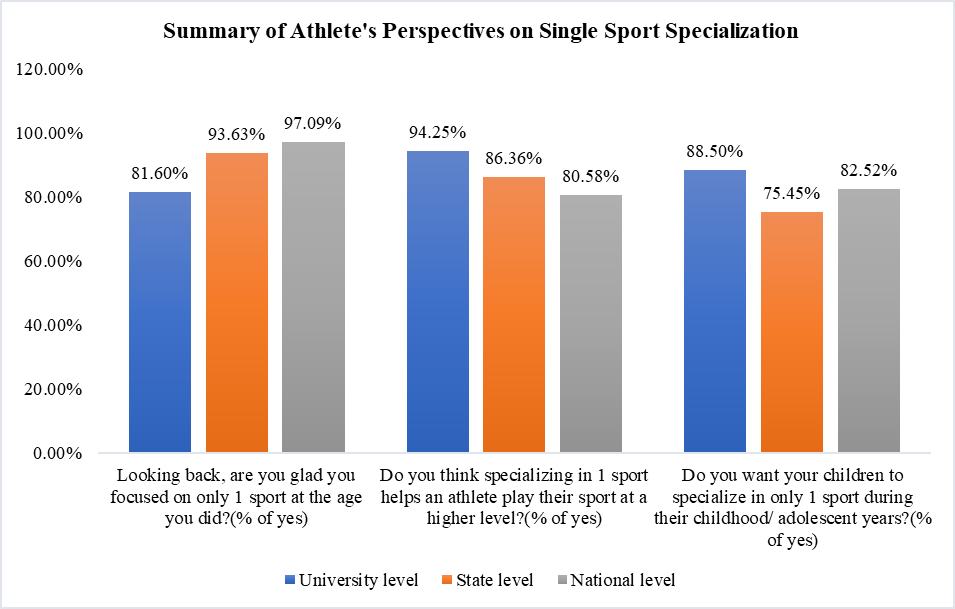
Graph 3. Summary of Athletes’ Perspectives on Single Sport Specialization.
Graph 3 showed that, when asked whether they were glad they had focused on a single sport at the age they did, national-level athletes responded highly affirmatively (p < 0.001). Additionally, university-level athletes demonstrated a strong consensus (p = 0.947) in their belief that specialization enhances an athlete’s ability to reach higher levels of success. Regarding the perspective on encouraging their children to specialize in a single sport, responses were generally consistent across all levels of competition. However, university-level athletes showed a slightly stronger inclination toward endorsing specialization (p = 0.06)
DISCUSSION
The aim of this study was to provide a comprehensive look into the phenomenon of single-sport specialization among athletes competing at the university, state, and national-levels. By analyzing data from 300 athletes at Guru Nanak Dev University, we were able to assess the prevalence of single sport specialization at 3 different populations of athletes who have achieved varying levels of athletic success.
Prevalence and Age of Specialization
Our results indicate that a significantly higher percentage of national-level athletes quit other sports to specialize in a single sport in comparison with others (p-value <.001) however, the age at which they quit was almost similar across all three levels as mentioned in table 2 and graph 1& 2. These findings convey that although national athletes were successful in reaching higher levels of competition, quitting at an early age did not play a significant role in the achievement of athletic success.
Supporting this, Research suggests that early intense training has not been proven necessary for attaining athletic success in all the sports. It is also pointed out that although some aerobic training adaptations occur in childhood, they are far less pronounced than those in adolescence [2]. Further reinforcing this view, a survey conducted on elite and sub-elite Danish athletes from various sports, including track and field, weightlifting, and cycling, highlighted notable differences in their training patterns. The elite players dedicated fewer hours to their main sport before the age 15 and begin sports specializing in later years of their life as compared to their sub-elite counterparts. Nevertheless, by 18, both groups had accumulated a comparable amount of practice hours. It was only after the age of 21 that the elite athletes surpassed the sub-elite group in total accumulated training hours demonstrating that early sport specialization did not contribute to their eventual success. [11].
Injury Risk
Our data indicate that university-level athletes indulged in year-round training for a statistically significantly number of months compared to their national and state-level counterparts, who, in contrast, indulged in more months competing throughout the year. Interestingly, injury incidence of whooping 89.5% was also revealed among university level, with athletes attributing these injuries to single-sport specialization. This may suggest that athletes at university-level who engage more extensively in training, might be more susceptible to overuse injuries due to inadequate recovery periods throughout the year. Therefore, maintaining balance between training and recovery must be important, incorporating recovery strategies, and avoiding excessive early specialization to mitigate injury risk in youth athletes.
Multiple studies have demonstrated a clear correlation between increased weekly exposure hours and a higher injury risk in young immature athletes [3,12]. Year-round sports participation often fails to provide adolescents with the necessary recovery time for physiological repair and adaptation following intense activity. Engaging in high-intensity training during this critical stage of development may heighten the injury risk [10].
Athlete Perspectives on Specialization
The results of our study suggest that national-level athletes demonstrated the highest level of satisfaction with their preference to focus on a single-sport early in their careers (p < 0.001) as per graph 3. Meanwhile, significantly high university-level athletes believed that ESS helps an athlete to compete at an elite level, the comparatively less pronounced agreement among national-level athletes suggests that while specialization may contribute to skill development, it may not be the sole factor in achieving elite performance.
Interestingly, when considering whether they would encourage their children to specialize in a single-sport during his/her childhood or adolescent years, responses were more varied with borderline significance (p=0.06). University-level athletes were the most likely to support specialization (88.50%), suggest a nuanced perspective among university athletes; while many attributed their high injury prevalence with ESS, they largely perceive that the benefits of specialization outweigh its disadvantages. Whereas, the relatively higher hesitation among state and national-level athletes may reflect slight awareness of the risks associated with ESS.
Our findings show that national-level athletes were most satisfied with their ESS, while university-level athletes strongly believed ESS supports elite performance, despite reporting the highest injury incidence (89.5%). Interestingly, state- and national-level athletes were more hesitant about encouraging future generations to specialize early. These results are in line with earlier studies, Buckley et al. [10] observed similar patterns, where collegiate athletes reported the highest specialization rates (67.7%), compared to high school (45.2%) and professional athletes (46.0%). Notably, although many professionals (61.7%) believed ESS enhances performance, only 22.3% would recommend it to their own children. This parallels our findings, where athletes at higher competitive levels showed greater caution about early specialization, possibly due to first hand awareness of its long-term drawbacks [10,13].
The debate around ESS continues to evolve, with mounting evidence underscoring both the benefits and the risks associated with this approach. While early specialization may provide athletes with a competitive edge in the short term, the physical, psychological, and social costs can be significant. Moving forward, coaches, parents, and policymakers must take in account, the long-term implications of ESS and encourage youth athletes to pursue a more diversified, balanced approach to sports participation. In doing so, one can aid in fostering a generation of athletes who are not just physically capable but also emotionally and mentally resilient, setting them up for success both within and beyond the sports arena. However, there are study limitations, it is important to consider that the data was collected retrospectively, based on athletes' self-reported recollections, which may be subject to recall bias. Additionally, the cross-sectional design limits the ability to track long-term effects or establish causal relationships. Despite these considerations, the study contributes valuable evidence to the ongoing discussion about ESS, emphasizing the need for a more diversified and balanced approach to youth sports to promote long-term athletic development and overall well-being.
CONCLUSION
This study provides valuable insights into the prevalence, impact, and perspectives on ESS among university, state, and national-level athletes. While national-level athletes were more likely to specialize in a single sport, the age of specialization was consistent across all levels, indicating that early specialization alone may not determine athletic success. Additionally, university-level athletes reported the highest injury rates, likely due to prolonged year-round training periods and inadequate recovery. This underscores the importance of balancing training and recovery periods to reduce injury risks. Furthermore, athlete perspectives varied with national-level athletes expressing the highest satisfaction with their decision to specialize, while university athletes demonstrated the strongest belief that ESS can help attain athletic success in the future. These findings reinforce that sustainable athletic development is best supported through diversified training, balanced workloads, and structured recovery strategies rather than early specialization. However, when considering their children’s participation in ESS, responses were more nuanced, some athletes preferred the benefits of training over the negative aspects while others exhibited an evolving awareness of risks associated with early specialization. Future longitudinal studies are needed to clarify the long-term impact of ESS, but current evidence suggests that delaying specialization may better promote both performance and athlete well-being.
ACKNOWLEDGEMENTS
We would like to sincerely thank Directorate of Sports, Guru Nanak Dev University for their excellent assistance and collaboration in making this study possible. We sincerely thank the athletes who took part in the study their commitment and readiness to give of their time and energy were essential to the project's success. We would like to express our gratitude to our friends and family for their continuous encouragement and support during this research.
CONFLICT OF INTEREST
There is no conflict of interest.
REFERENCES
- Malina RM. (2010). Early sport specialization: roots, effectiveness, risks. Curr Sports Med Rep. 9(6):364-371.
- Jayanthi N, LaBella CR, Fischer D, Pasulka J, Dugas LR. (2013). Sports-specialized intensive training and the risk of injury in young athletes: a clinical case-control study. Am J Sports Med. 41(2):312-319.
- Jayanthi N, De Freitas T, Dugas LR, Schneiders A, Sallis R. (2015). Sports specialization in young athletes: evidence-based recommendations. Sports Health. 7(5):370-373.
- Hill G, Simons J. (1989). A study of sport specialization on high school athletics. J Sport Soc Issues. 13(1):1-13.
- Feeley BT, Agel J, LaPrade RF. (2016). When is it too early for single sport specialization? Am J Sports Med. 44(1):234-241.
- Jayanthi N, Pinkham C, Dugas L, Patrick B, Labella C. (2011). Sports specialization in young athletes: a risk factor for injury? Sports Health. 3(3):221-227.
- Ericsson KA, Krampe RT, Tesch-Römer C. (1993). The role of deliberate practice in the acquisition of expert performance. Psychol Rev. 100(3):363-406.
- Gustafsson H, Kenttä G, Hassmén P. (2011). Athlete burnout: an integrated model and future research directions. Int Rev Sport Exerc Psychol. 4(1):3-24.
- Wolff A. (2002). High school sports: inside the changing world of our young athletes. Sports Illustrated. 97(20):74-92.
- Buckley PS, Bishop M, Kane P, Ciccotti MG, Selverian S, Exume D, et al. (2017). Early single-sport specialization: a survey of 3090 high school, collegiate, and professional athletes. Orthop J Sports Med. 5(7):2325967117703944.
- Moesch K, Elbe AM, Hauge MLT, Wikman JM. (2011). Late specialization: The key to success in centimeters, grams, or seconds (cgs) sports. Scand J Med Sci Sports. 21(6):e282-e290.
- Rose MS, Emery CA, Meeuwisse WH. (2008). Sociodemographic predictors of sport injury in adolescents. Med Sci Sports Exerc. 40(3):444-450
- Baker J, Cobley S, Fraser‐Thomas J. (2009). What do we know about early sport specialization? Not much!. High ability studies. 20(1):77-89.
